


.png)
You don’t have to call them “myths” in the H2s, but this structure usually lands well with operators and regionals.
If ILS leads convert poorly, it’s tempting to blame the channel. In reality, quality is shaped by:
The same renter can be “bad” or “great” depending on whether you make it easy for them to self-qualify and take the next step. A cluttered website with weak CTAs will drag down conversion from both ILS and intent traffic sources.
Owning more of your traffic is absolutely the right long-term goal. Strong local SEO and smart search campaigns are some of the most efficient ways to capture high-intent renters.
But ILS platforms still:
The smarter play isn’t to go “all or nothing” on ILS. It’s to gradually trade out low-performing, generic ILS spend for channels where you own the traffic and data—once your intent capture system is strong enough to handle it.
Many marketing teams have tried this: cut a chunk of ILS budget, move it to Google Ads, and expect a clean swap in lead volume. What usually happens:
Your goal isn’t to “switch” channels. It’s to evolve from a heavy ILS dependency toward a more balanced portfolio—without shocking the top of your funnel or your occupancy.
Here’s a mental model you can use throughout the piece and on sales calls.
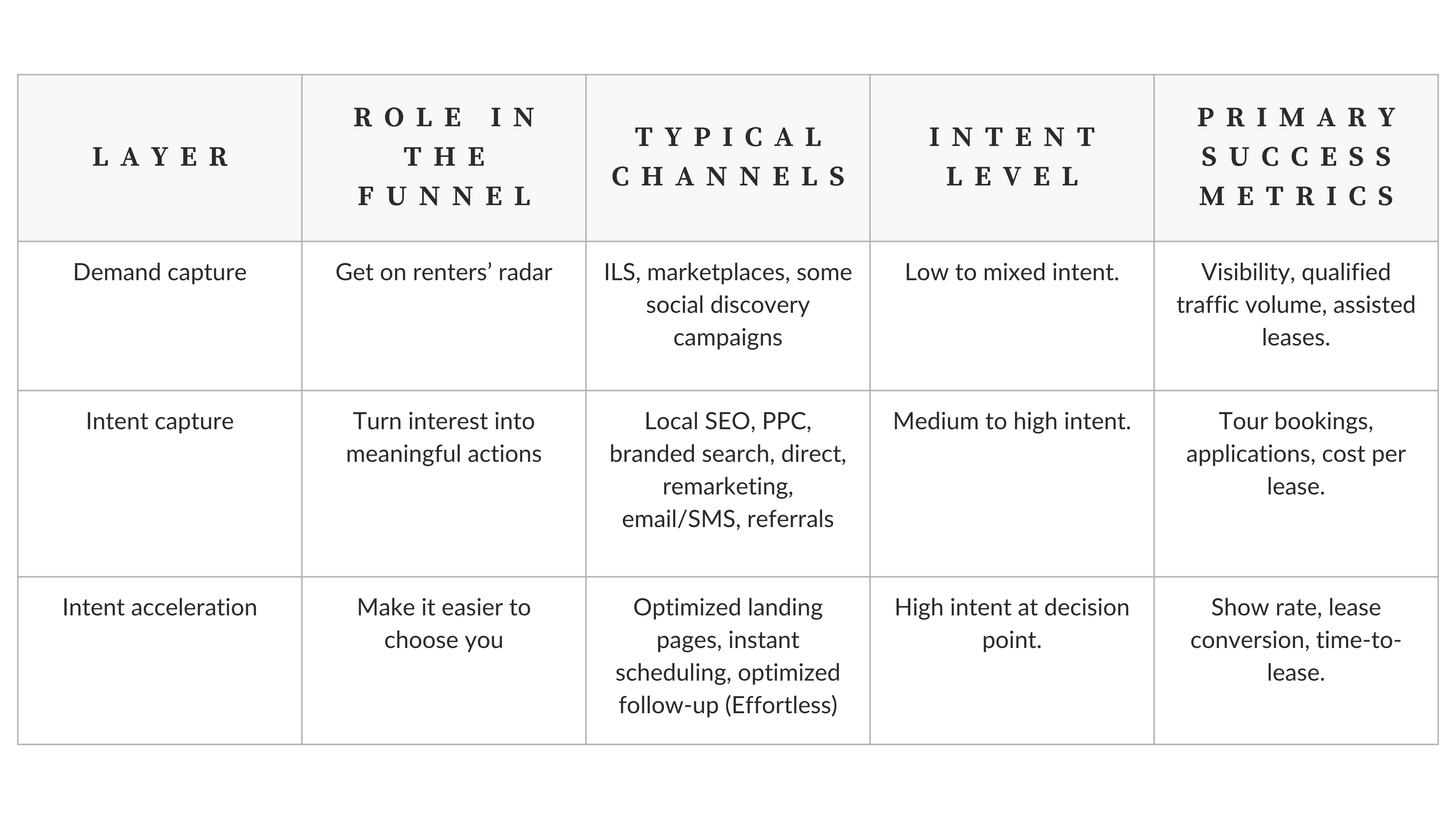
When you explain it this way, it’s clear that removing an entire layer doesn’t “free up budget”—it creates a bottleneck. You want each layer tuned, measured, and right-sized, not pitted against the others.